


What Is Insulation?
This might feel like a stupid question to have to ask, but that couldn’t be further from the truth.
Insulation is incredibly important, for so many reasons. But it’s also a pretty difficult topic to truly understand, especially since parts of it run against what most people intuitively assume to be true.
In reality, this is an incredibly important question to ask. And an even more important question to answer. So, let’s take a closer look at insulation — starting with what insulation does…
What Insulation Does
At its core, the job of insulation is simple: it resists heat transfer.
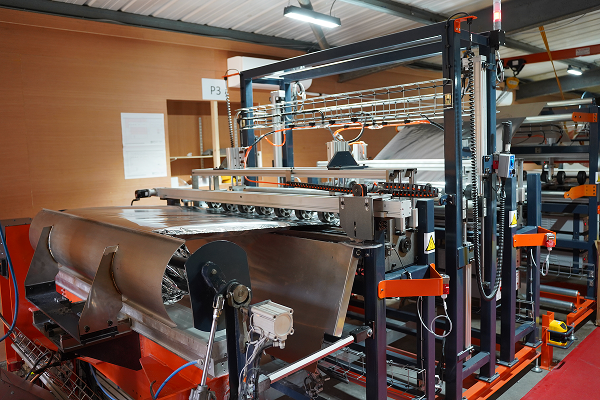
Heat seeks equilibrium, which is basically a fancy way to say that it tries to spread itself out as evenly as it possibly can. As a result, heat will always “move” away from warm spaces and toward colder ones; and it has three main ways to “move” like this…
- Conduction: Heat travelling through a solid material. This is the way the heat of a hot pan will heat up the handle of the pan too.
- Convection: Heat moving through the circulation of a fluid (which pretty much just means gasses – like air – or liquids – like water). This is how a radiator heats the air in a room, which then circulates and heats the room itself.
- Radiation: Heat travelling in a straight line as an invisible wave. This is how you can feel the warmth of the sun on your face.
Heat is especially eager to “move” like this when there is a big difference in temperature. And that’s why, in winter, the heat in your home is so quick to disappear into the cold outside. But, in summer, it seems completely impossible to keep the heat out of your home. So, if you want to keep your home a different temperature from the outside world, you’re going to need something to help you out.
That’s where insulation comes in. Unfortunately, it’s also where one of the biggest misconception about insulation comes in too. So let’s get that misunderstanding out of the way before we go any further.
Insulation doesn’t generate warmth, despite what so many people are led to believe. Instead, all insulation makes it harder for heat to “move”. It does this by getting in the way of the three forms of heat transfer (Conduction, Convection, and Radiation), making it much harder for heat to “move” past the boundary of your home in either direction. By doing that, it helps you to keep the heat where you want it.
In other words, insulation puts you in control.
How Insulation Does It
Here’s a secret: technically, everything is insulation.
Every material in existence resists heat transfer to some extent. The plasterboard of your walls, the glass in your windows, even the air in your home. They all provide some level of insulation.
The problem is, most of them aren’t very good at it. And that’s why we have dedicated insulation materials, because they are good at slowing down heat transfer.
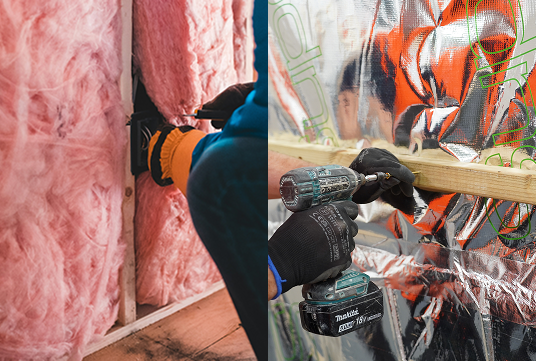
Traditional materials like mineral wool or PIR boards work by trapping tiny pockets of air, which is a very effective way to fight against heat transfer through both conduction and convection.
Multifoil insulation, like our own SuperFOIL, takes a different approach. It uses layers of wadding to trap air too, but it also layers that wadding with reflective layers that act as a barrier to radiant heat, reflecting it away.
By combining providing protection against all 3 forms of heat transfer; provides a high level of performance in a thin, flexible product.
Regardless of which ones you choose, by making use of materials that excel at slowing the movement of heat, you can dramatically improve your home’s ability to maintain a comfortable, stable temperature.
Bringing It All Together: What Is Insulation?
So, taking a look at everything we now know about insulation, we can put together a solid explanation of what it actually is.
Insulation is any material that is particularly good at resisting the transfer of heat, by interfering with the processes of conductive, convective, or radiative heat transfer.
In other words, Insulation is a material that is particularly good at keeping heat where it is. Even when there is a significant difference in temperature on either side of the insulation.
Understanding insulation what it is, is the first step on the journey to truly understanding insulation and what it can do for your home, so why not take the next step now by learning about the different types of insulation available in our post: “What Kinds of Insulation Are There?”
